
To get rid of bed bugs in Singapore, you need to combine hot laundering of fabrics at 60°C or above, thorough vacuuming, high-heat steam, mattress encasement and ongoing monitoring. For anything beyond a very early, single-room problem, a professional bed bug treatment is usually required, because eggs and adult bugs hide deep inside mattress seams, furniture joints, skirting boards and wall cracks that surface sprays and home remedies rarely reach. This guide explains how to recognise, inspect for, remove and prevent bed bugs, how professional treatment actually works, and when it makes sense to call a licensed bed bugs exterminator.
Key Takeaways
- Bed bugs are small, reddish-brown insects that feed on human blood at night and hide near beds during the day. In Singapore the Tropical bed bug is the most common species, alongside the Common bed bug.
- A clean home does not prevent bed bugs. They are carried in through luggage, second-hand furniture, clothing and neighbouring units, which is why Singapore’s dense HDB and condo living makes them spread easily.
- Early bed bug inspection matters. Look for itchy bite clusters, rust-coloured blood spots, dark faecal marks, shed skins, pale eggs and a musty odour.
- DIY removal can help in the earliest stages, but bed bugs survive inside structures where home methods cannot reach, so incomplete efforts often make the problem worse.
- Professional bed bug treatment in Singapore typically combines detailed inspection, vacuum extraction, heat steaming, and ULV misting with NEA-approved products, followed by post-treatment monitoring.
What Are Bed Bugs?
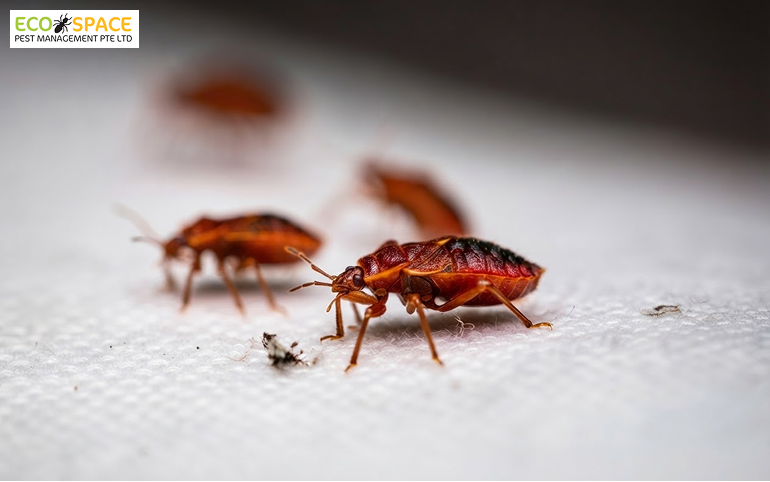
Bed bugs are small, wingless insects that feed exclusively on the blood of humans and, occasionally, animals. An adult is roughly 4 to 7 millimetres long, flat, oval, and reddish-brown, which makes a well-fed adult look a little like a lentil or an apple seed. They are visible to the naked eye, but they are shy of light and hide during the day, so most people notice the bites and the stains long before they ever see a live bug.
Two species are relevant in Singapore. The Tropical bed bug (Cimex hemipterus) is strongly associated with warm, humid climates like ours and is the species most frequently found close to sleeping and resting areas. The Common bed bug (Cimex lectularius) has a worldwide distribution and can be brought into Singapore properties through travel, luggage, clothing and second-hand furniture. The two look and behave so similarly that they usually cannot be told apart by eye, which is one reason a proper inspection matters before treatment begins.
Bed bugs are difficult to eliminate for three biological reasons. First, they reproduce quickly. A single female can lay up to several hundred eggs across her lifetime, and those eggs hatch within roughly six to ten days in Singapore’s warm indoor conditions, so a small problem can become an established infestation in a matter of weeks. Second, they are extremely resilient. Depending on temperature and conditions, bed bugs can survive for several months without a blood meal, which means simply leaving a room empty does not starve them out on any practical timescale. Third, they hide in life stages that home treatments miss, particularly eggs cemented deep inside seams and cracks, which is why an infestation so often returns after a promising first attempt.
How to Tell If You Have Bed Bugs: Signs and Inspection
The earlier you detect bed bugs, the smaller and cheaper the problem is to solve. Because the insects themselves stay hidden, most people identify an infestation from the traces they leave behind rather than from the bugs.
Watch for these signs of bed bugs:
- Bites in clusters or lines. Small, itchy, red welts, often across the arms, neck, shoulders and legs, that appear overnight. Reactions vary widely, and some people show almost no mark at all.
- Blood spots. Small rust or reddish smears on sheets and pillowcases, left when a feeding bug is crushed during sleep.
- Dark faecal spots. Tiny black or dark-brown dots, a little like marker-pen ink, along mattress seams, bed frames and skirting.
- Shed skins and eggshells. Pale, translucent casings near resting areas as nymphs grow and moult.
- A musty, sweet odour. Noticeable in heavier infestations.
How to Spot Bed Bugs Before It’s Too Late
Catch them early to save time, money, and sleep.
1. Unique Bite Patterns
- Small, itchy, red welts on arms, neck, shoulders, and legs
- Typically appear overnight in lines or clusters
2. Blood Spots on Bedding
- Rust-colored or reddish smears on sheets and pillowcases
- Caused by crushed bugs after feeding during the night
3. Dark Fecal Marks
- Tiny black or dark-brown dots (resemble fine marker-pen ink)
- Found clustered along mattress seams, bed frames, and baseboards
4. Shed Skins & Shells
- Pale, translucent casings left behind
- Found near hiding spots as growing nymphs molt
5. A Distinct Odor
- A sweet, musty smell in the room
- Usually indicates a larger, heavier infestation
Where bed bugs hide in Singapore homes
When you carry out a home inspection, focus on the places closest to where people sleep and sit, because bed bugs stay near their food source. Check mattress seams, the underside and joints of bed frames, headboards, and box springs first. Then work outward to cracks in wooden floors and along skirting boards, curtain folds, electrical outlets, behind loose wallpaper and picture frames, and soft furnishings such as sofas and cushions. In HDB flats and condominiums, also pay attention to gaps around shared walls and service voids, since these can let bugs move between units.
What a professional bed bug inspection involves
A do-it-yourself check is useful, but a professional bed bug inspection is more systematic. Rather than relying on surface observation, a trained technician works through the unit methodically to locate live bugs, eggs, shed skins, blood spots and faecal staining, then maps how far the infestation has spread and identifies the harbourage points where the bugs are breeding. That map is what turns a guess into a targeted treatment plan, and it is particularly important in compact HDB layouts where a missed harbourage in one room can re-seed the whole flat. If you would like this done properly, EcoSpace Pest Management begins every job with a detailed bed bug inspection before recommending any treatment.
How Bed Bugs Spread in Singapore
One of the most persistent myths about bed bugs is that they are a sign of a dirty home. They are not. Bed bugs are hitchhikers that travel on belongings, and they will settle into a spotless flat just as readily as a cluttered one. Understanding how they arrive is the first step to keeping them out.
In Singapore, the most common entry routes are travel and second-hand items. Bed bugs and their eggs tuck into luggage, jackets and bags after a hotel stay or an overseas trip, then unpack themselves at home. Pre-owned mattresses, sofas and bed frames are another frequent source, as are items collected from the void deck or bought used without inspection. Overnight guests can unknowingly bring them in on clothing and bags.
Our high-density housing then makes spread easier than in many other countries. In HDB flats and condominiums, bed bugs can move between units through wall cracks, plumbing voids and shared structures, so an infestation next door is a genuine risk factor. A less obvious source is shared laundry. Laundromats and communal washing facilities, particularly around budget accommodation and dormitories, can transfer bugs between users through laundry bags, damp fabrics and machines that are not cleaned between loads. When you use shared facilities, wash on hot, dry on high heat, keep clean laundry off shared surfaces, and bring your own bags.
How to Remove Bed Bugs at Home: Step by Step
If you have caught the problem early and it is confined to one room, the following steps give you the best chance of controlling bed bugs before they establish. Work through them thoroughly, because a half-finished effort can scatter the bugs and make the infestation harder to treat later.
Isolate and hot-launder fabrics
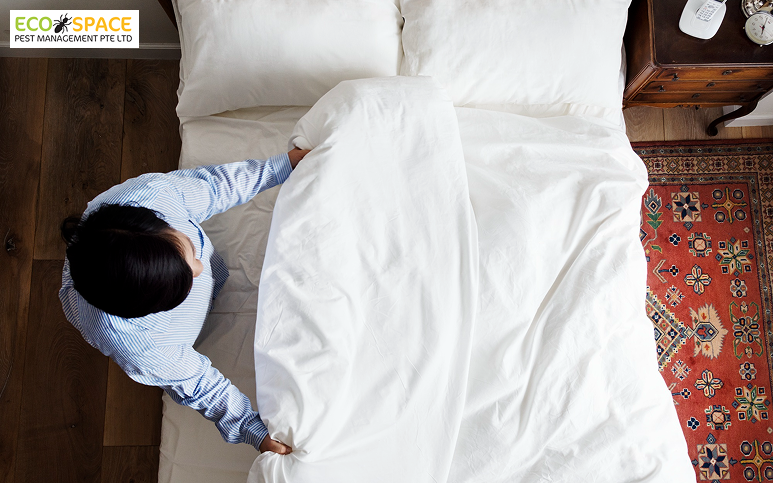
Strip bedding, curtains and washable clothing from the affected room and wash them at 60°C or higher, then dry on the highest heat setting the fabric allows. Sustained high heat kills bed bugs at every life stage, including eggs. Bag items before carrying them out of the room so you do not spread bugs on the way to the machine.
Vacuum every surface
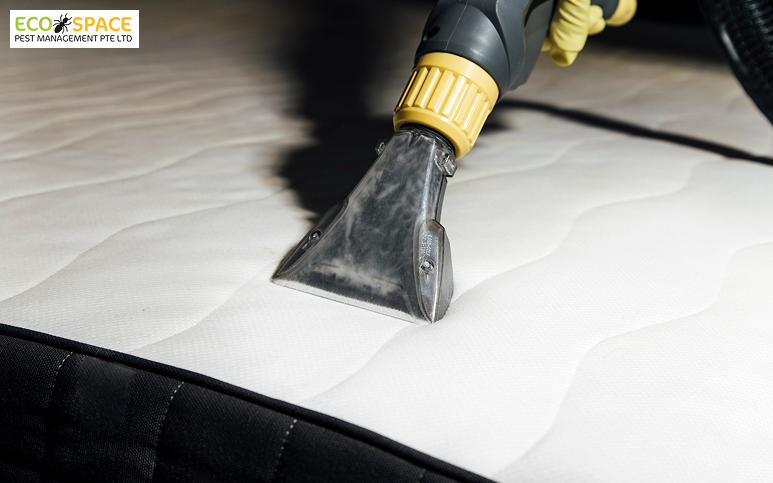
Use a strong vacuum on mattress surfaces and seams, bed frames, cracks, baseboards and upholstered furniture. Immediately seal the vacuum contents in a bag and dispose of it outside the home, so anything you have captured cannot crawl back out.
Apply high-heat steam.
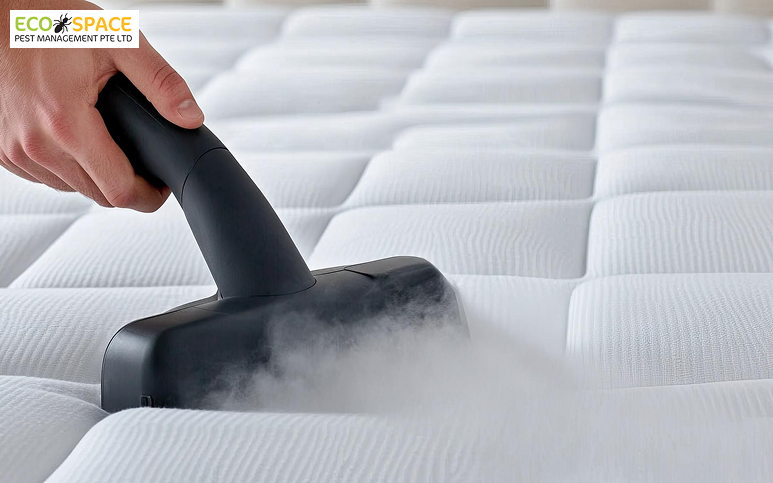
A steam cleaner directed into seams, frames, sofas and curtains kills live bugs and eggs on contact. Steam reaches into folds and crevices that sprays skip, which is why it is one of the more reliable home methods.
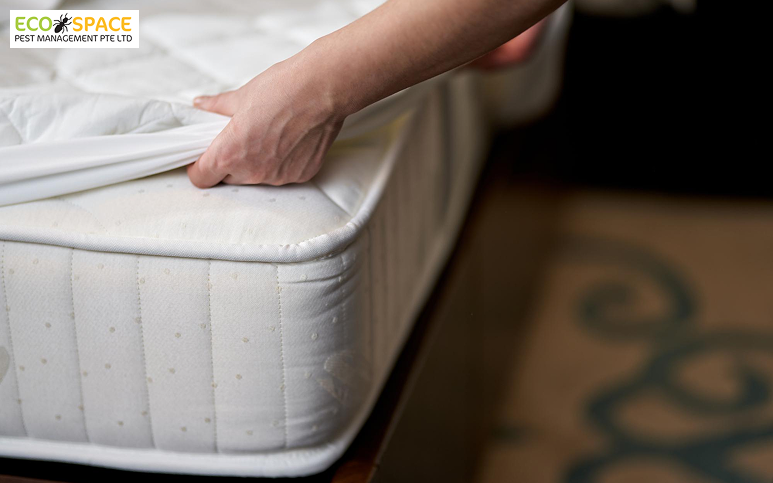
Encase the mattress and box spring.
Fit certified bed-bug-proof encasements. These trap any bugs left inside so they cannot feed or escape, and they make future inspection far easier because there are fewer seams for bugs to hide in.
Install interceptors under bed legs.
Place traps beneath each bed post to catch bugs trying to climb up to feed. Interceptors also give you an ongoing read on whether activity is continuing.
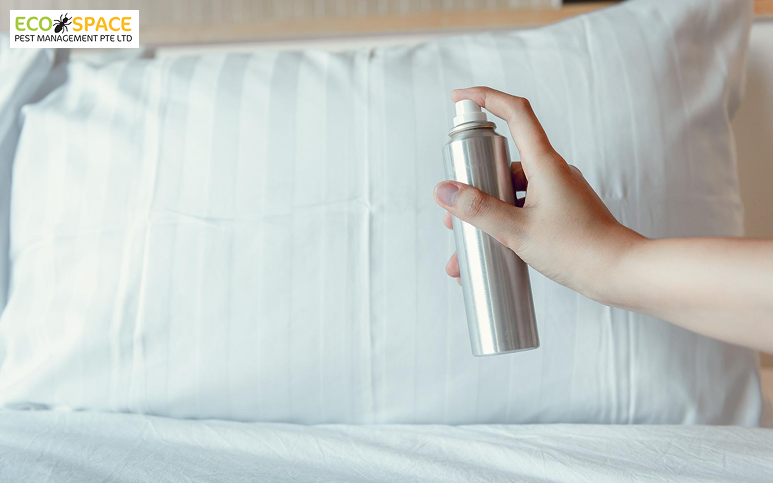
Use only NEA-approved insecticides, carefully.
If activity persists, use only products approved for household use, following the label and local guidelines exactly. Never improvise with concentrated or agricultural chemicals in a home, which is both unsafe and often counterproductive.
Complete every step and keep monitoring for two to three weeks. If you still see bites, live bugs or fresh spotting after diligent effort, the infestation has almost certainly moved beyond what home methods can reach.
Why DIY Bed Bug Removal Often Falls Short
It is worth being honest about the limits of home treatment, because unrealistic expectations are how small problems become expensive ones. DIY methods target the bugs you can see and the surfaces you can reach. The trouble is that most of an infestation is neither visible nor accessible.
Bed bugs shelter deep inside mattress cores, furniture joints, wall cavities, skirting gaps and electrical fittings, and their eggs are cemented into place where surface cleaning and steam never arrive. A retail spray may knock down the adults on a mattress top while leaving a reservoir of eggs to hatch a week later. Worse, disturbing a harbourage without eliminating it can push bugs into new areas, spreading the problem across rooms or into a neighbouring unit. This is the pattern behind the common complaint that bed bugs “keep coming back”: each round of partial treatment leaves enough behind to rebuild the population.
Lasting results come from a structured approach that treats every life stage across every harbourage in a single coordinated programme, then verifies success with follow-up. That is what professional bed bug treatment is designed to deliver, and it is why engaging professional pest control services in Singapore usually clears an infestation faster and more completely than repeated DIY attempts.
Professional Bed Bug Treatment Methods Explained
A qualified bed bugs exterminator does not rely on one product. Instead, effective bed bug control in Singapore combines physical removal, heat and targeted application so that bugs are hit at every life stage and in every hiding place. These are the core methods EcoSpace uses in Singapore homes and businesses.
Detailed inspection and species identification
Every effective treatment starts by locating the infestation rather than guessing at it. The technician inspects harbourage areas, confirms activity from live bugs, eggs, shed skins and staining, and identifies whether you are dealing with the Tropical or Common bed bug. Accurate identification and mapping shape the whole plan that follows.
Vacuum extraction
High-powered vacuuming physically removes live bugs, nymphs, shed skins and debris from infested surfaces before other treatments are applied. This immediately reduces the visible population and clears surfaces so that heat and misting can work more effectively.
Heat steaming
High-temperature steam, applied at over 100°C on contact, penetrates deep into fabrics, mattress seams, frames and cracks, killing bed bugs and their eggs where they hide. Because heat travels into gaps that liquids cannot coat evenly, steaming is central to treating the structural hiding spots that defeat home methods. It is also a low-residue approach, which suits bedrooms and family spaces.
ULV misting and residual application
Ultra-low-volume misting disperses a fine insecticide mist that reaches hard-to-access voids and surrounding areas, helping to bring down exposed bugs and reduce the chance of re-infestation. EcoSpace uses NEA-approved products, applied with the care and placement that only trained technicians can judge, so that treatment is both effective and safe in an occupied home.
DIY versus professional treatment at a glance
| Factor | DIY home methods | Professional bed bug treatment |
|---|---|---|
| Reaches eggs in seams and cracks | Rarely | Yes, through heat and targeted application |
| Treats structural harbourages (walls, frames, voids) | No | Yes |
| Species identification | No | Yes |
| Risk of spreading the infestation | Higher, if harbourages are disturbed | Lower, treated in one coordinated programme |
| Verification and follow-up | Self-monitoring only | Structured follow-up and monitoring |
| Best suited to | Very early, single-room activity | Established, spreading or recurring infestations |
How Much Does Bed Bug Treatment Cost in Singapore?
There is no single flat rate for bed bug treatment in Singapore, because every infestation differs. Across the Singapore market, one-off bed bug treatments are commonly quoted from around S$150 for a single, lightly affected room to S$980 or more for whole-unit or heat-based treatment of a severe, spread infestation. Reputable companies quote after an inspection rather than over the phone, because the price depends on factors a technician needs to see.
The main things that move the price are:
Property size. A one-bedroom HDB flat costs less to treat than a large condominium or landed home.
Extent of the infestation. Bugs confined to one bedroom are cheaper to resolve than a problem spread across multiple rooms, sofas and beds.
Treatment method. Chemical, steam, heat or a combination each carry different costs.
Number of visits. Bed bugs almost always need at least one follow-up, so total cost is rarely a single-visit figure.
Preparation and clutter. Heavily cluttered homes take longer to inspect and treat.
Rather than publish a headline number that rarely matches the real job, EcoSpace assesses your property and gives a quote based on what the inspection finds, so the treatment plan and the price reflect your actual situation. To arrange this, book a bed bug inspection.
How Long Does It Take to Get Rid of Bed Bugs?
A single treatment session commonly runs from a few hours to a full day, depending on the method used and how widespread the infestation is. Full clearance, however, usually takes longer than one visit. Because eggs can continue to hatch after the first treatment, most infestations need at least one follow-up so that newly emerged bugs are dealt with before they can breed again. Through the treatment window, interceptors and monitoring confirm whether activity has genuinely stopped or whether a further visit is warranted. Acting early shortens this whole timeline, since a contained, single-room problem is far quicker to resolve than one that has spread across a flat.
Preventing Bed Bugs From Coming Back
Once an infestation has been treated, the goal shifts to keeping your home bed-bug-free. Prevention in Singapore is mostly about controlling how bugs are introduced and removing the places they could shelter.
- Seal cracks and gaps in walls, skirting and wooden furniture, especially in older HDB and condo units, to close off hiding spots and passage between rooms.
- Keep mattresses and pillows encased in bed-bug-proof covers for year-round protection and easier inspection.
- Inspect second-hand furniture thoroughly, or avoid it, unless it has been professionally checked before entering the home.
- Vacuum regularly, focusing on bedrooms, baseboards and upholstered furniture, to remove stray bugs and eggs before they settle.
- Be alert after travel. Check luggage and clothing when you return from hotels or short-term rentals, and hot-wash travel clothes before storing them.
Building these habits into your routine is far less disruptive than treating a fresh infestation, and it protects the result of any professional treatment you have paid for.
Bed Bugs in Commercial Spaces
Bed bugs are not only a household problem. In Singapore, hostels, hotels, dormitories, serviced apartments and shared offices are all vulnerable, and the reputational cost of an infestation in these settings can be significant. Fabric-panel desks, shared sofas, seating and carpets can all harbour bugs, and staff or guests may carry them in and out on bags and clothing, spreading a workplace problem into homes.
For any business that offers seating, accommodation or shared facilities, routine inspection is a sensible investment in both hygiene and brand protection. EcoSpace provides discreet, eco-conscious commercial pest control in Singapore tailored to the operating needs of hospitality, dormitory and office environments.
How NEA Recommends Managing Bed Bugs
Singapore’s National Environment Agency advises that effective bed bug control usually involves a combination of non-chemical and chemical methods rather than any single fix. According to the National Environment Agency’s guidance on bed bug management
, these methods include vacuuming, hot laundering, steam and heat treatment, removing harbourages, and the careful use of insecticides. This is exactly why a credible programme layers several techniques together, and it mirrors EcoSpace’s multi-step approach, where the plan is built around the infestation level, the affected areas and the type of property. For further background, the United States Environmental Protection Agency also maintains a detailed public resource on bed bugs and integrated control.
Why Choose EcoSpace for Bed Bug Treatment in Singapore
Choosing a bed bugs exterminator is a trust decision, so it helps to know who you are dealing with. EcoSpace Pest Management provides professional bed bug pest control in Singapore for homes, dormitories, hotels, offices and commercial spaces. It is a registered Vector Control Operator with the National Environment Agency and a member of the Singapore Pest Management Association, which reflects a commitment to responsible, professional standards. The company has operated since 2018, and its team brings more than 20 years of combined field experience across residential, commercial, food and beverage, pharmaceutical and industrial settings.
That experience spans exactly the property types Singaporeans live and work in: HDB flats, condominiums, landed homes, hotels, dormitories and offices, and it underpins EcoSpace’s wider residential pest control services for homes alongside its commercial work. Every job follows a structured process, from inspection and species identification through treatment to post-service advice and follow-up, and treatment layers heat steaming, vacuum extraction and residual application rather than relying on one method. The approach is deliberately eco-conscious, favouring heat and physical removal and applying NEA-approved products with care, so that homes stay both safe and comfortable after treatment.
If you suspect bed bug activity, or DIY efforts are not working, contact EcoSpace Pest Management to arrange a professional inspection and a treatment plan built around your home.
 EcoSpace Pest Management Pte Ltd